
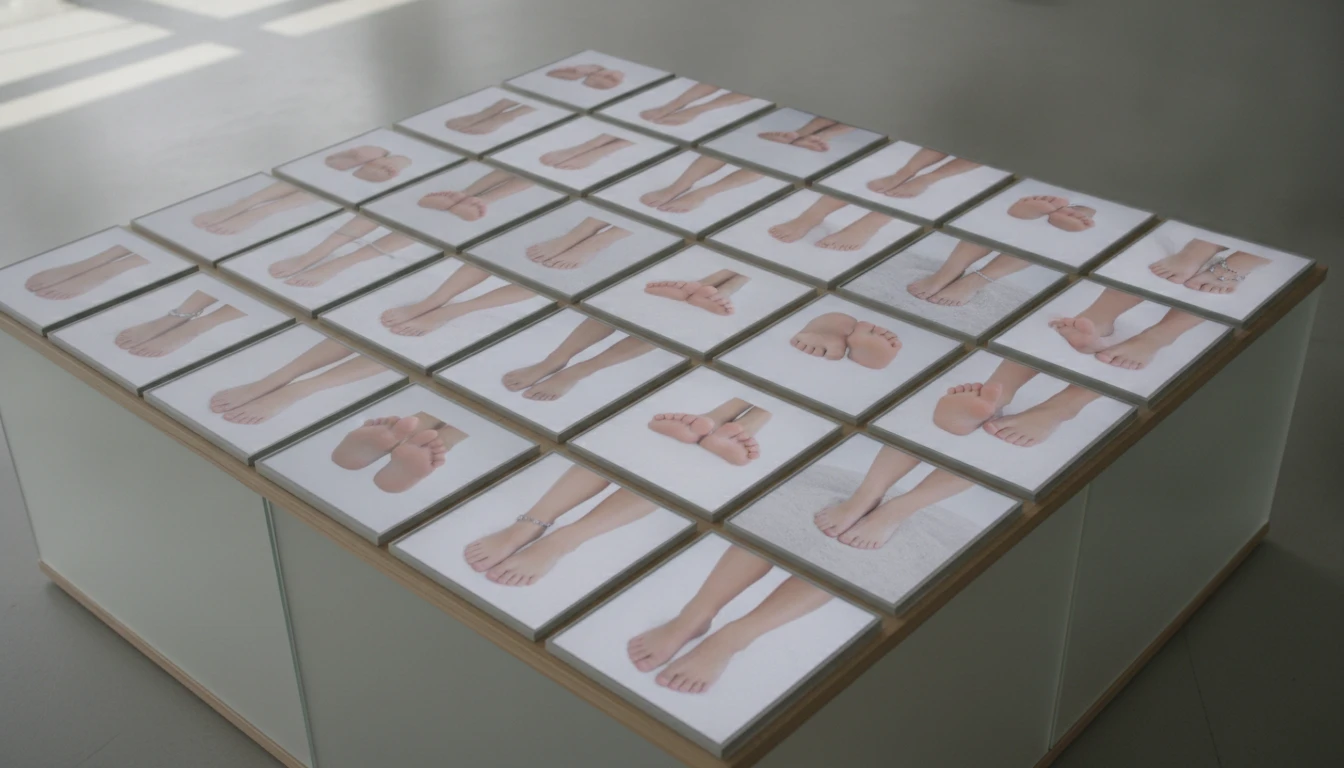
Building a strong foot content portfolio isn’t just about tossing together random pictures. A tidy, visually attractive collection shows off your skills as a serious foot content creator and draws in buyers seeking professional quality images. With plenty of experience working with photos and online branding, I’ve picked up lots of tips that truly help your portfolio shine.
Why Every Foot Content Creator Needs a Portfolio
If your main aim is to sell feet pictures, having a dedicated foot content portfolio is one of the smartest ways to build trust with buyers. A solid portfolio shows off your variety, creativity, and professionalism. It also works like a business card; clients can see at a glance what you bring to the table, instead of having to ask for endless samples. Whether you’re just beginning or already have a few sales under your belt, a well-made portfolio helps that crucial first impression count.
Portfolio vs. Random Photo Collection
There’s a real difference between a portfolio and just any old bunch of toe shots on your phone or a computer folder. A foot modeling portfolio is curated and purposeful, organized with your finest work, set into specific categories with variety and a personal style. Buyers want to know you’ve put thought into your work, not just tossed up unedited or mismatched images. A proper portfolio tells them you’re committed, creative, and capable of delivering what they want.
Choosing Your Best Images Over Quantity
It’s so tempting to include every single photo, but quality beats quantity daily. Picking your most impressive images is crucial to make your foot photography portfolio stand tall. Choose only crisp, well-lit, and eye-catching shots. Be sure to mix things up, but let every photo earn its place. Unsure about your choices? Show your top pics to friends and ask which ones really pop.
Building a Consistent Visual Style
Consistency helps buyers remember your brand, even as you experiment with creative foot photography approaches. That can be through the way you edit colors, the props you pick, or the feel of your backgrounds. Stick to a similar look throughout your work. If you prefer bold colors, natural light, or subtle backgrounds, keep things steady across your portfolio to look polished and memorable.
Organizing Photos Into Categories
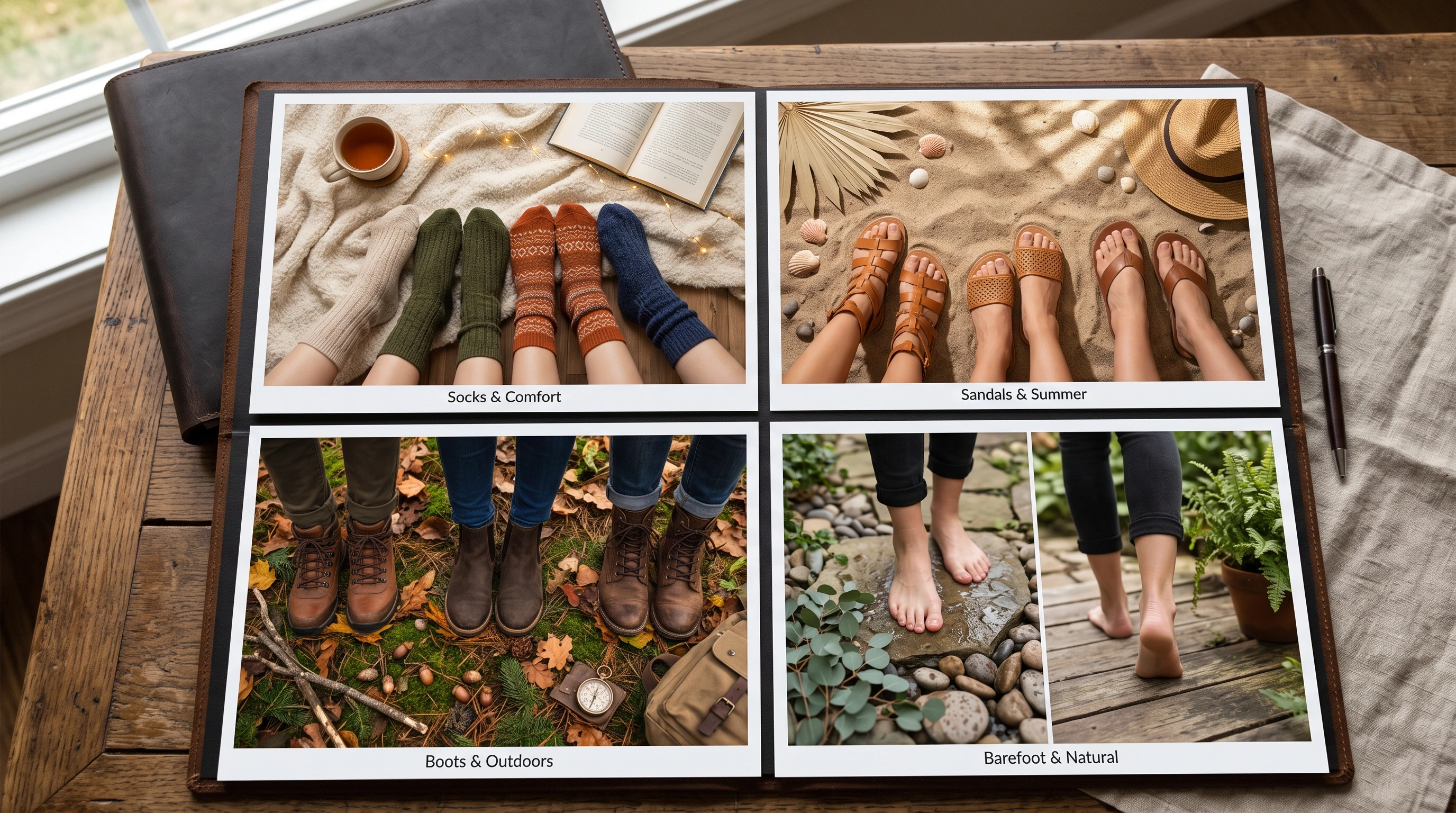
Buyers are after different styles and themes, so arranging your foot content portfolio into categories smooths the way for them. Check out a few smart categories you could use:
- Bare Feet: Clean shots that show off shape and skin tone.
- Socks: Fun patterns and cozy vibes, appealing to a particular audience.
- Shoes: From heels to sneakers, these images highlight your personality and sense of style.
- Sandals: Bright, open shots that let your feet and backdrops shine.
- Outdoor Photography: Nature trails, beaches, lawns—different backgrounds pump up your variety.
- Lifestyle Images: Relaxed scenes like feet by the pool, at a desk, or with a cup of coffee.
- Seasonal Themes: Pumpkin patches, holiday lights, summer poolside shots; perfect for special editions.
- Creative Concepts: Play with props, paint, unique camera angles, or wild settings for standout shots.
Breaking your work down like this makes it easier for buyers to request custom sets; they’ll quickly spot what you’re best at.
The Importance of Lighting and Image Quality
Bright, sharp photos get your work noticed so much more than dark or blurry images. Natural light is usually best—try shooting near a big window or add a basic ring light for indoor shots. Watch out for too-bright sunshine that can create harsh shadows. Always lock your camera focus and double-check that your photos aren’t grainy or pixelated. Learning a few basics can give a serious boost to your foot photography.
Why Backgrounds Matter
The background plays a much bigger part than you’d think. Neat, clutter-free settings focus all the attention on your feet. Simple options like a rug, sheet, or wood floor help your work look far more professional. Adding small, subtle props like a mug or book can show personality, but avoid letting the background take over the shot.
Color Coordination and Aesthetics
Colors that fit well together help your foot content portfolio feel polished and pleasing to browse. Use backgrounds, clothes, and props that fit your color palette. Neon socks, for instance, work best with neutral backgrounds, while themed shoots benefit from colors tied to the occasion. Good color sense can make your brand feel thoughtful and easy to recognize.
Showing Variety Without Looking Repetitive
Showing different angles is important, but too much repetition feels stale. Here’s how to keep it fresh:
- Switch up camera angles—overhead, profile, closeup, or wide.
- Change foot poses and props.
- Try both indoor and outdoor locations.
- Mix posed shots with casual, everyday moments.
These simple tricks help buyers see the different ways you can deliver professional results and keep them scrolling.
How Many Photos Should Your Portfolio Have?
Quality comes first. Most beginners should aim for 15 to 30 top-tier images in their professional foot content portfolio. Too few? It feels incomplete. Too many? Your best work gets lost in the shuffle. Start with at least 8-10 strong images for every main style, like bare feet or socks, then fill in more as you build your brand.
Should You Include Videos?
Adding short, well-made videos is an excellent bonus. It lets buyers get a better feel for how your feet look in motion—a detail still images miss. A quick 10-15 second video showing foot movement, a shoe try on, or a relaxing outdoor stroll can give your work an edge. Just make sure your video looks as sharp and polished as your photos do.
Naming and Organizing Your Files
Staying neat with your digital files is super important for any foot content creator. Use easy-to-read, descriptive file names like “barefootwoods-spring2024.jpg” instead of a nondescript “IMG0158.jpg.” Keep folders set up by year, theme, and style. For example:
- 2024/Bare Feet/Spring
- 2024/Socks/Holiday
This simple system helps you retrieve any photo clients ask for, so you won’t waste time searching later.
Creating a Portfolio for Social Media vs. Paying Customers
Social accounts are great for highlight reels, but your main portfolio for buyers should stay organized and professional. On Instagram, TikTok, or Twitter, post samples that draw interest, behind-the-scenes peeks, and themed content to attract fans. For customers, use a secure link through Google Drive, Dropbox, or your own website where your best foot imagery is neatly sorted and quick to browse.
Common Mistakes Beginners Make
- Uploading too many nearly identical photos or not enough images to show range
- Ignoring lighting or using low-res cellphone snaps only
- Busy backgrounds that distract from the feet
- Messy file names and unorganized folders
- Mixing personal or unrelated photos in with business content
- Forgetting to use watermarks for protection
Catching these early helps your credibility as a professional foot content creator grow much faster.
Updating Your Portfolio Regularly
Your style, skills, and even industry trends will evolve naturally. Review and freshen up your foot portfolio every couple of months. Swap old shots for recent favorites, add creative or seasonal themes, and highlight your current best work. Buyers notice when you’re active and improving, so keeping things current pays off.
Protecting Your Work With Watermarks and Previews
Theft and image piracy are real concerns in this business, so keep your work safe. Add a small watermark with your business name or logo—make it just visible enough not to ruin the picture. Keep previews low-res for sharing online, saving the high-res versions for paying buyers only. Taking these steps helps attract buyers while keeping your work secure.
Tips for Developing Your Personal Brand
- Pick a memorable name for your foot content alias.
- Stick with a clear logo, watermark, or consistent color scheme in your work.
- Write a friendly profile or bio focusing on your unique style.
- Share regular updates with new photos, satisfied client feedback, or behind-the-scenes looks.
- Connect with your audience in a professional, approachable manner.
The more solid and reliable your personal brand looks, the better your chances of winning over serious buyers and landing paid gigs.
Final Checklist Before Publishing Your Portfolio
- Are all your images sharp, well-lit, and pro quality?
- Are your photos grouped clearly by theme or category?
- Is your style consistent throughout?
- Are your file names simple and descriptive?
- Did you add a watermark or other security for previews?
- Does your branding look polished and memorable?
- Are you set up to share your portfolio via social media, email, or a secure link?
Give yourself a final check before publishing to make sure you’re putting your best foot forward. Trust me—your first impression matters.
Your Next Steps
Building a killer foot content portfolio takes some work, imagination, and a bit of planning, but it’s worth putting the time in. Treat your work as a true professional asset—keep it updated, add new themes, and always show your best. You’ll build trust and attract a growing circle of buyers this way. Keep tweaking your portfolio, stick to your personal style, and remember: it’s not just about selling photos; you’re growing a standout brand in the foot modeling world.
Related Articles
Creating a professional foot content portfolio is just one step toward building a successful content business. From taking better photos and mastering flattering poses to choosing the right backgrounds and expanding into video content, these guides will help you create a portfolio that attracts more buyers and showcases your best work.